Prices fall as supply continues to grow: EU pork market update

Thursday, 30 July 2026

Key points

  • EU pig prices have fallen for six consecutive weeks to stand at 134.92p/kg equivalent for the week ending 19 July as oversupply continues to weigh on the market.
  • EU pig meat production increased by 3% year on year during the first quarter of 2026 (Q1), supported by higher slaughter and heavier carcase weights.
  • EU pig meat exports remained relatively steady in Q1 2026, totalling 1.04 million tonnes, while imports increased by 7% year on year to 36,000 tonnes. 
  • The European market is expected to remain under pressure in the near term due to ample supplies and subdued demand. However, factors including Denmark’s proposed agricultural reforms and continued risk of African swine fever could tighten production over the longer term. 

Prices

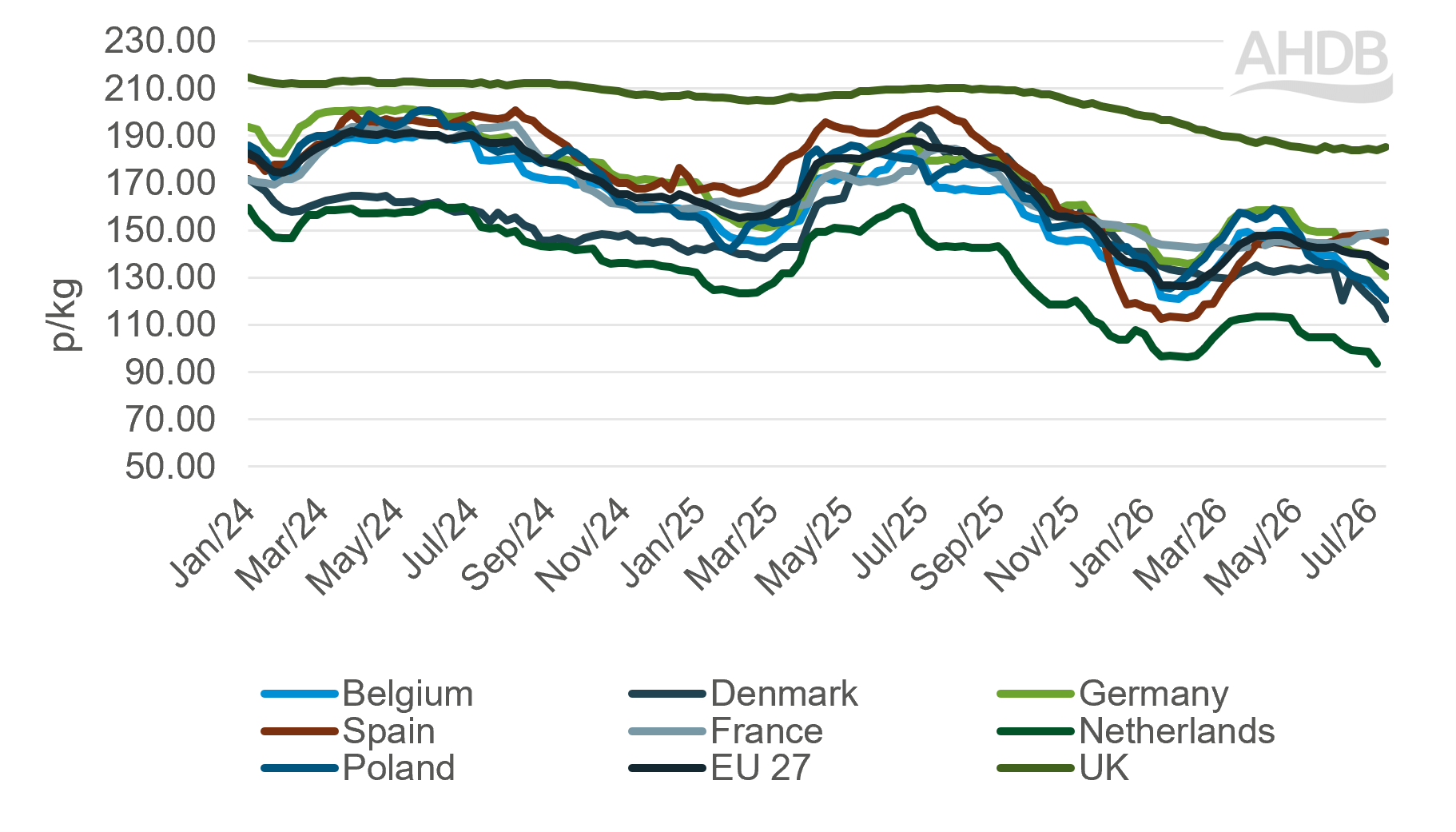
European pig prices continue to weaken. The EU Grade S reference pig price fell to 134.92p/kg equivalent for the week ending 19 July, a decline of 2.04p/kg compared with the previous week. This represents the sixth consecutive weekly fall in the measure.

The gap between EU and UK prices has continued to widen, now at 50.2p, an increase of 12p since the start of May.

Prices across most producing nations are now back at, or below, the lows recorded in January and February. The Danish price lost 18p equivalent over the past month to average 112.62p/kg in the week ending 19 July, the lowest level since March 2022. The German price lost 10p over the period while Spain lost just 2p. Meanwhile, the French price gained 4p.

European pig prices continue to be weighed upon by a greater pork supply and subdued consumer demand. While heatwaves had reportedly eased some supply pressure in recent weeks (suppressed growth rates and throughput), supply generally has grown due to improved productivity and ASF-related export restrictions. Market reports suggest cold stores are plentiful which is subduing demand for slaughter pigs. The summer holiday period is expected to continue to weigh on demand.

In turn, the piglet trade is weak, with finished market losses deterring producers from restocking. Hot weather has compounded this by disrupting piglet exports. The average European piglet price stood at €42.36/head in the week beginning 6 July, 40% below the same week a year ago.

Figure 1. Trends in selected European grade S reference pig prices (p/kg)

Source: Eurostat

Production

EU27 pig meat production for the first quarter of 2026 stood at 5.8 million tonnes, a 2.7% (153,100 tonne) increase year on year (YoY).

Growth was largely driven by Spain (+5%), and Poland (+7%). Denmark recorded a 9% increase, while France recording a more modest rise of 1%. Elsewhere, production was steadier in Belgium and Germany. The Netherlands experienced the largest reduction among the major producing countries, with output falling by 8% (30,600 tonnes) YoY.

Higher production levels across the bloc were supported by increases in both slaughter and carcase weights. EU clean pig slaughter increased by 2% YoY to total 59 million head, while average EU carcase weights gained 0.3% (0.26 kg) YoY to average 98.43 kg.

Figure 2. Pig meat production of select EU27 countries Q1 2024–2026

Source: Eurostat

Exports

EU pig meat export volumes remained relatively steady in the first quarter of 2026, totalling 1.04 million tonnes across fresh, frozen and processed products, including offal.

Looking across member states, Spanish and German exports remained strong, each up 2% YoY to 701,800 tonnes and 504,900 tonnes, respectively. Danish exports grew by 10%, boosted by intra-EU and Asian (excl. China) trade. This pushed the country above the Netherlands to be the EU’s third largest exporter for the year-to-date. Dutch volumes fell by 6% to 365,600 tonnes, primarily on intra-EU and Chinese losses.

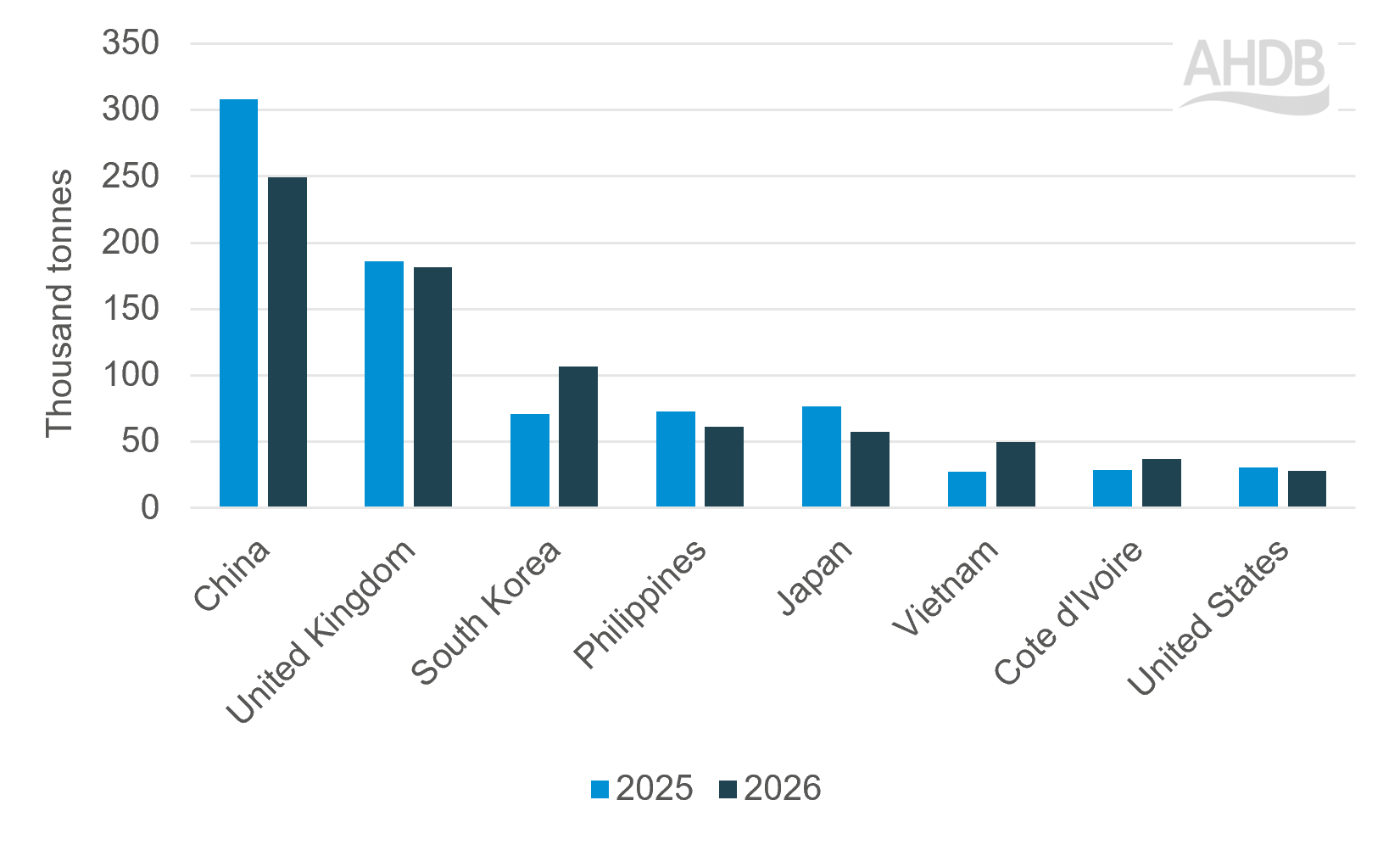
China remained the EU’s largest export destination overall, but shipments declined by 20% YoY, reflecting ongoing anti-dumping measures, weaker market conditions and focus on market protection.

The UK remained the EU’s second-largest export destination, but shipments declined by 4% (11,100 tonnes) YoY. The significant price differential during the early part of 2026 did not translate into increased imports, signalling domestic support for British product.

Meanwhile, EU exports to other Asian markets recorded strong growth. Shipments to South Korea increased by 50% to 139,000 tonnes, while exports to Vietnam rose by 76% to 64,200 tonnes. More modest growth was also recorded in exports to Ivory Coast and the Democratic Republic of Congo. The trends highlight the importance of diversified export markets as demand from China weakens.

On 22 May, the Philippines lifted its blanket ban on imports of Spanish pork and pork by-products, retaining restrictions only on products from areas of Catalonia affected by the outbreak. The move could help restore trade flows and provide an additional outlet for supplies from the well-stocked European market.

Figure 3. Exports of pig meat (including offal) from the EU27 to non-EU countries between January to March 2025 and 2026

Source: Eurostat compiled by Trade Data Monitor LLC

Imports

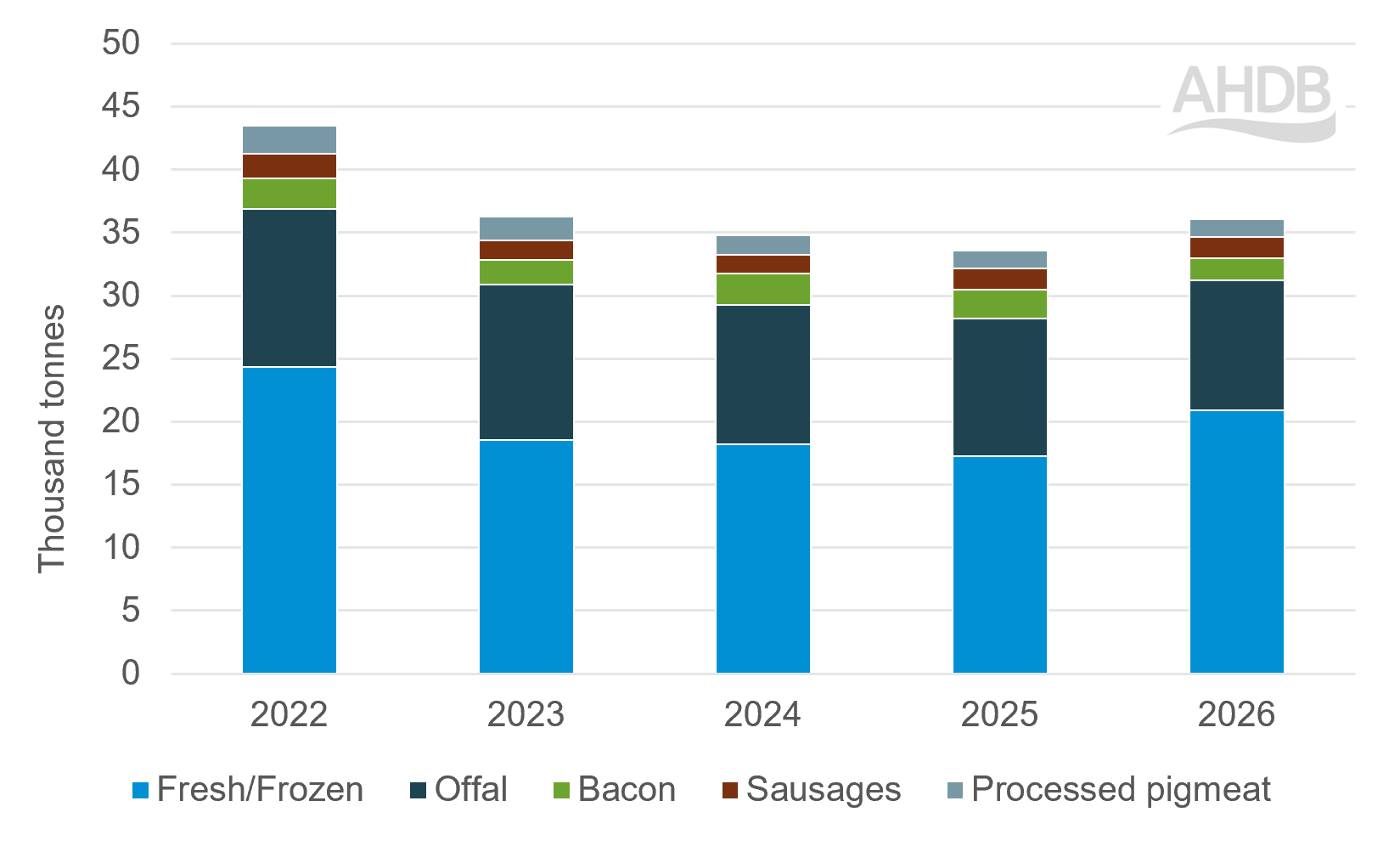
EU pig meat imports for the first quarter of 2026 stood at 36,000 tonnes, up 7% YoY according to Eurostat data.

The UK remained the largest individual supplier, with volumes up YoY (26,000 tonnes recorded for the first quarter of 2026).

It is worth noting that comparisons with HMRC export figures should be treated with some caution, as the two datasets use different reporting methodologies. Eurostat records imports by country of origin, while HMRC reports exports by country of dispatch, and so figures may not match others reported elsewhere.

Looking at product categories, offal and bacon experienced declines, down 6% and 24% respectively YoY, while fresh/frozen pork recorded an increase of 21%. Sausages and processed pigmeat remained relatively stable YoY.  

Figure 4 Imports of pig meat (including offal) from the EU27 to non-EU countries between January to March 2022 and 2026

Source: Eurostat compiled by Trade Data Monitor LLC

Looking ahead

Looking ahead, several factors are likely to influence the direction of the European pork market over the coming months.

One of the most significant developments is the new Danish government's proposed agricultural reforms. These include measures aimed at improving environmental sustainability, such as introducing a carbon tax on livestock by 2030, increasing land dedicated to wildlife, and encouraging greater domestic self-sufficiency. Proposed welfare changes, including increasing the minimum weaning age from three to four weeks, phasing out tail docking and phasing out confinement systems, could also increase production costs and reduce overall output. Any reduction in production or exports could have implications for key markets including Germany, Poland and China. While these changes may present challenges for European supply chains, they could create opportunities for UK producers if buyers seek alternative sources of pork.

Disease remains another key risk. Although the African Swine Fever outbreak in Spain has been largely contained and remains confined to wild boar, recent outbreaks in domestic pigs in Hungary and a large commercial farm in Poland highlight the continued threat posed by ASF across Europe.

In the short term, however, the European market is expected to remain under pressure. Current oversupply, combined with relatively subdued consumer demand, is likely to keep downward pressure on pig prices.

Sign up for regular updates

Subscribe to receive pork market news straight to your inbox. Simply complete our online form.

Visit the Keep in touch page

While AHDB seeks to ensure that the information contained on this webpage is accurate at the time of publication, no warranty is given in respect of the information and data provided. You are responsible for how you use the information. To the maximum extent permitted by law, AHDB accepts no liability for loss, damage or injury howsoever caused or suffered (including that caused by negligence) directly or indirectly in relation to the information or data provided in this publication.

All intellectual property rights in the information and data on this webpage belong to or are licensed by AHDB. You are authorised to use such information for your internal business purposes only and you must not provide this information to any other third parties, including further publication of the information, or for commercial gain in any way whatsoever without the prior written permission of AHDB for each third party disclosure, publication or commercial arrangement. For more information, please see our Terms of Use and Privacy Notice or contact the Director of Corporate Affairs at info@ahdb.org.uk  © Agriculture and Horticulture Development Board. All rights reserved. 

×