Dairy in foodservice: The trends shaping today’s menus

Tuesday, 2 June 2026

The eating-out market has faced sustained pressure in recent years, and with household budgets still tight, consumers are being more selective about where they spend.

That is especially true for the third of consumers who say their finances have worsened in recent months, as 57% say they plan to cut back on eating out¹. The impact is already visible, with out-of-home food spend down 0.5% year-on-year².

Even so, people still want to eat out; they just need meals to feel worth the cost.

We explore the impact for dairy, as well as red meat.

Dairy: A dependable value driver

Dairy continues to perform strongly in foodservice, accounting for almost a third of menu items and growing by 6.4 percentage points since 2023³.

Table 1. Share of items with dairy as an ingredient in menus, Q1 2022–Q1 2026³

Year

% share of items with dairy as an ingredient in menus

2022

25.8

2023

23.7

2024

24.9

2025

29.4

2026

30.1


This growth is largely driven by cheese, which has increased by 8.5 percentage points over the past four years³.

Its versatility and ability to add flavour, texture and satisfaction make it a key tool for operators, who are using cheese to enhance satiety, mouthfeel and overall appeal.

Championing cheese

Core cheese propositions now account for 379 menu items, up from 289 in 2024, with burgers, pizzas and pub mains driving the majority of use³.

While American cheese is gaining traction in burgers, Cheddar remains the staple, valued for its familiarity, comfort cues and cost advantage over more specialised cheeses³.

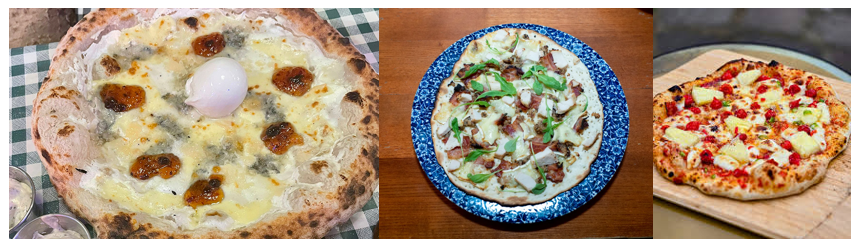
Pizza remains the second key dish, with usage evolving. Multi-cheese toppings have grown from 3.6% of pizzas in 2024 to 10% in 2026³, as operators combine mozzarella with cheeses such as brie, parmesan and goat’s cheese to create differentiation and elevate flavour.

Figure 1. Examples of mixed cheeses on menus

Graphic showing examples of mixed cheese used on menus

Figure 1 shows, from left to right, an eight-cheese pizza featuring ricotta, buffalo mozzarella, for di latte, gorgonzola, parmesan, provola, pecorino and burrata from Pizza Pilgrims; a chicken stuffing pizza with a mozzarella and brie base from Wetherspoons; and finally a mozzarella and Riserva cheese base for the sticky pig pizza from Zizzi’s.

Beyond mozzarella, more affordable European cheeses like Gruyère, Emmental and Camembert are gaining traction, with Gruyère up 13% year-on-year³.

In contrast, previously trending cheeses such as burrata are declining, down 10% in Q1 2026, as operators prioritise stronger flavours and better value³.

Format innovation for dairy

Menu innovation is shifting towards more indulgent, layered cheese formats, with stuffed and filled dishes emerging as the standout growth driver.

 Between 2024 and 2026, these formats delivered the strongest share gains³, as operators focus on dishes where cheese plays a more central, memorable role: from filled pasta and girasole to stuffed proteins and pastries.

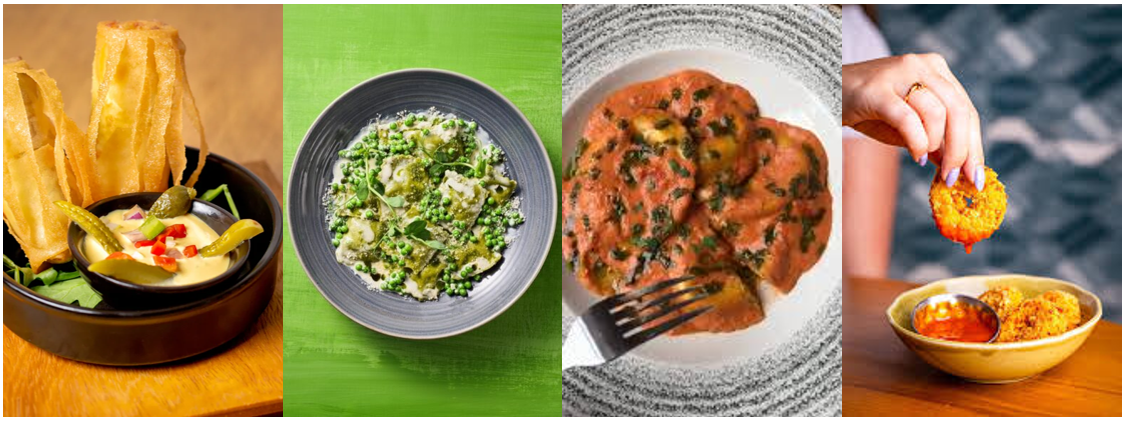
Figure 2. Examples of stuffed/filled dairy dishes

Graphic showing examples of dairy dishes where filled or stuffed descriptors are used

Figure 2 shows four plated examples of stuffed or filled dishes shown side by side: cheeseburger spring rolls served with a creamy dipping sauce and pickles from Sizzling Pubs; pea and goat’s cheese ravioli garnished with peas and herbs on a green background from Prezzo; Cheddar and jalapeño doughnuts topped with herbs on a white plate from Neill’s; and a hand dipping a golden, crumbed goat’s cheese girasole into a tomato-based sauce from Bella Italia.

While fried and crispy cheese remains the most prevalent format and continues to grow, momentum is strongest where cheese is hidden or encapsulated, adding both indulgence and theatre.

Loaded and bombé-style formats also show positive traction, reinforcing demand for bold, cheese-led concepts.

In contrast, baked cheese dishes have lost share³, suggesting simpler, more traditional formats are giving way to more indulgent and experiential menu options.

Flavour innovation for dairy

Spicy pairings – from chilli and chipotle to hot honey – are now firmly embedded in dairy-led dishes, but innovation is moving beyond heat alone.

As growth in spice slows³, operators are looking to balance richness rather than simply intensify it.

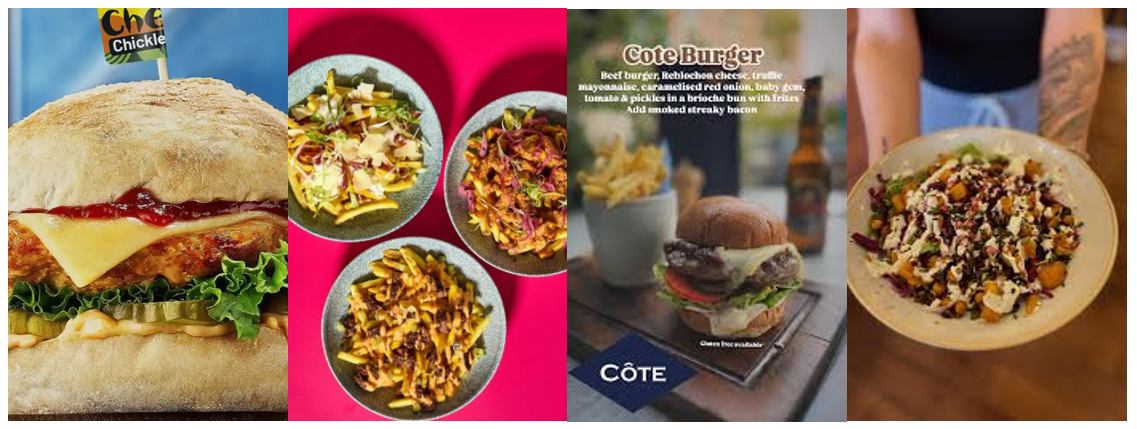
This is driving the rise of pickle as a complementary flavour. Pickled onions, burger pickles and fermented vegetables like kimchi are gaining traction³, adding acidity, crunch and freshness to cut through indulgent, cheese-heavy dishes.

Figure 3. Example of how pickles and pickled descriptors are being used on menus for dairy

Examples of dishes which use pickles and pickle descriptors on menus for dairy

Figure 3 shows, from left to right: a close-up of a fried chicken burger with a slice of melted cheese, lettuce and pickles in a soft bun from Nando’s; three bowls of cheeseburger loaded fries topped with cheese and mixed garnishes from Slug & Lettuce; a beef burger with melted cheese and pickles with chips on a wooden board from Côte; and a bowl of a mixed salad topped with crumbled cheese, grains and vegetables from Loungers.

At the same time, established pairings such as honey, caramelised flavours and truffle remain important, particularly in premium and sweet–savoury applications³.

Overall, spice remains influential, but operators are increasingly layering in sharper, balancing flavours to create more rounded dairy-led dishes.

Channel evolution

Across all channels, dairy continues to command a price premium, with dishes priced at 1.2 times non-dairy items on average³.

This gap has widened since 2022, reflecting operators’ growing reliance on dairy – particularly cheese – as a driver of value, adding around £2 to the price of a dish³.

Restaurants and coffee shops are using new dairy items to boost margins, with new dishes priced on average 43.3% higher than comparable existing items³.

This highlights how operators are using innovation to elevate their offering, with cheese and yogurt presenting the strongest opportunities due to their high perceived value.

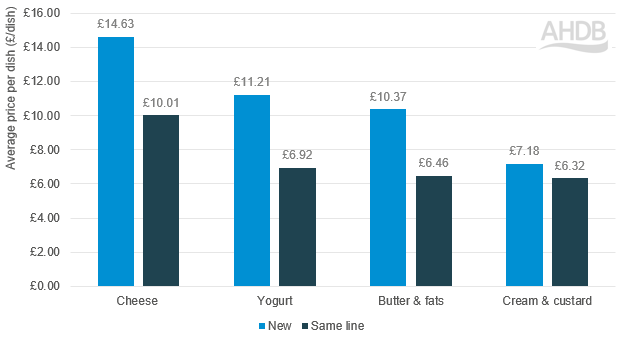
Figure 4. New and same line prices for dairy-based dishes by dairy category, Q1 2026³

Graph showing new and same line prices for dairy based dishes by category

Figure 4 compares the average price per dish for new menu items versus items on the same line across four dairy categories. New cheese dishes have the highest average price at £14.63 compared with £10.01 for existing lines. Yogurt (£11.21 vs £6.92) and butter and fats (£10.37 vs £6.46) also show a clear price premium for new items. Cream and custard show a smaller gap, with new dishes averaging £7.18 compared with £6.32 for existing items

Storytelling on menus

Provenance plays an important role but is now expected by all rather than being a key differentiator for branded chains.

The share of dairy items featuring provenance claims has risen from 43.7% in 2024 to 52.3% in 2026³, often through named cheeses or global origin cues.

Table 3. Price variance in dairy items with provenance cues vs those without, by provenance category and dish type, Q1 2026³

Dish type

Specific cheese type

Geographic – global

Production– traditional

Production – cooking

Geographic - European

New dish

+£6.60

+£2.01

+£1.36

+£0.87

-£0.93

Same line dish

+£2.85

+£0.21

-£4.43

+£2.82

-£0.98

Broad claims such as ‘European’ or ‘traditional’ are increasingly seen as hygiene factors, limiting their ability to drive price premiums³. In contrast, specific cheese varieties, distinctive origins and identifiable cooking methods deliver stronger value across both new and existing dishes.

Cheese commands the highest provenance premium and is most likely to feature multiple descriptors, with terms like rich, soft and creamy enhancing appeal³.

Restaurants lead in using provenance to reinforce quality, while pubs and bars tend to adopt a more functional approach, prioritising clarity over storytelling³.

The consumer mindset: Mindful choices and growing health cues

A major shift shaping the out-of-home market is how consumers think about food.

Diners are paying closer attention to ingredients, processing and health cues, with terms like ultra-processed and GLP-1 becoming part of everyday food conversations.

Rather than focusing on restriction, many are seeking added benefits. As GLP-1 use grows and health priorities evolve, messages around protein and fibre are gaining traction.

When defining a healthy diet, consumers now emphasise additions, such as fruit and vegetables, hydration and balance over cutting calories, fat or sugar⁴.

This mindset is influencing behaviour, with operators responding through dishes that feel lighter, simpler and more functional.

As a result, high-protein options and smaller portions are becoming more common across both red meat and dairy.

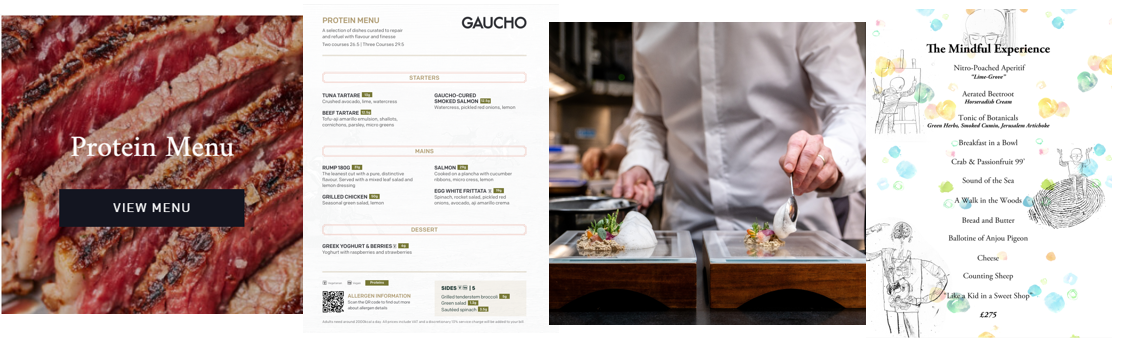
Figure 5. Examples of how protein and smaller portions are informing menus⁴

Graphic showing examples of how high protein and small portion size is being used on menus

Figure 5 shows four images illustrating how menus are catering to smaller portions and mindful eating experiences, with an example of a protein menu which states the number of grams of protein each dish contains and a mindful eating menu with dishes named after mindfulness exercises

What this means for operators

For dairy:

  • Dairy, particularly cheese, remains a strong value driver
  • Use innovation in format, flavour and provenance to support margin growth
  • As diners seek balance, comfort and added benefits, dairy is well placed to deliver dishes that feel rewarding and worth the spend

Sources

¹ AHDB/YouGov, February 2026

²Worldpanel by Numerator UK OOH data, 52 w/e 22 March 2026

³Lumina Intelligence, Menu Tracker 2026

⁴Lumina Intelligence & Food Navigator, Future Food Global Study, September 2025

Image of staff member Charlotte Forkes-Rees

Charlotte Forkes-Rees

Retail and Consumer Insight Analyst

See full bio


Sign up to receive the latest information from AHDB.


While AHDB seeks to ensure that the information contained on this webpage is accurate at the time of publication, no warranty is given in respect of the information and data provided. You are responsible for how you use the information. To the maximum extent permitted by law, AHDB accepts no liability for loss, damage or injury howsoever caused or suffered (including that caused by negligence) directly or indirectly in relation to the information or data provided in this publication.

All intellectual property rights in the information and data on this webpage belong to or are licensed by AHDB. You are authorised to use such information for your internal business purposes only and you must not provide this information to any other third parties, including further publication of the information, or for commercial gain in any way whatsoever without the prior written permission of AHDB for each third party disclosure, publication or commercial arrangement. For more information, please see our Terms of Use and Privacy Notice or contact the Director of Corporate Affairs at info@ahdb.org.uk  © Agriculture and Horticulture Development Board. All rights reserved. 

×