Latest BCMS data shows cattle under 12 months numbers start to grow: Beef market update

Thursday, 25 June 2026

The latest British Cattle Movement Service (BCMS) data from April 2026 shows the number of young cattle on farms is starting to rise.

Key points

  • The total cattle herd size remains in decline, but at a slower rate, while the structure of the herd moves to greater numbers of younger cattle.
  • Shifts in production systems persist as the suckler herd continues to contract, albeit at a slower rate, and dairy-beef numbers rise. The introduction of sexed male semen to the market has bolstered dairy beef male calf numbers in the last year.

Population

BCMS data shows the total GB cattle herd to stand at 7.48 million head as of 1 April 2026, down by 0.8% (60.5 thousand head) from April last year.

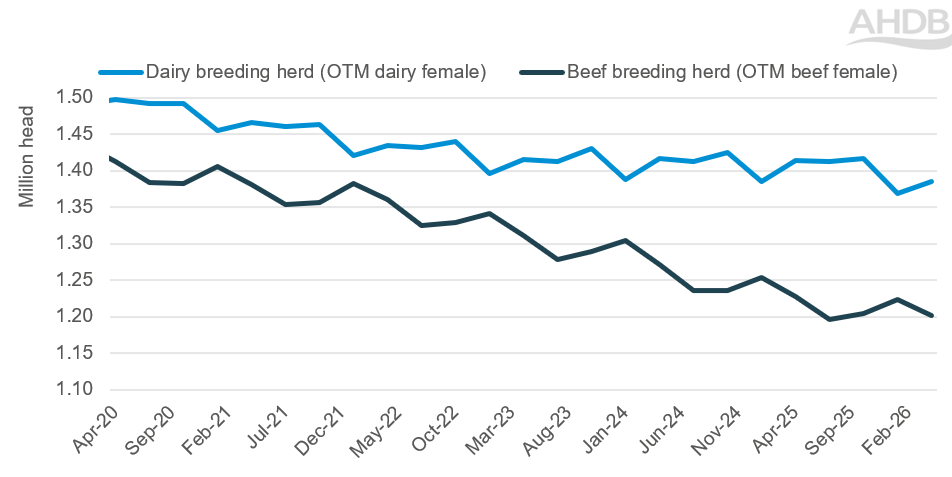
The female breeding herd (over 30 months (OTM)) consisted of 1.4 million dairy cattle, (down 2.0% year on year, and 1.2 million beef cattle down 2.1% year on year at 1 April 2026. This represents a shift from recent years, where the beef breeding herd was declining more rapidly than the dairy herd; this gap in decline rates has now narrowed.

Figure 1: Size of dairy and beef breeding herds from April 2020 – April 2026

Line chart showing breeding herd size

Source: BCMS via AHBD

Figure 1 shows a line chart, with the size of the dairy herd in light blue and the beef herd in dark blue, over the period April 2020 – April 2026.

This shift over recent quarters may reflect high milk prices through 2024 to mid-2025, which encouraged dairy farmers to retain dairy cows for another season. As prices declined throughout summer of 2025 due to global oversupply of milk, we began to see increased culling of in the dairy herd, with the aim to increase efficiency.

However, strong beef prices may have provided an incentive to retain dairy to produce a dairy-beef calf. Additionally, reports suggest some milking cows were also retained and fattened for beef due to the low milk price and high beef price. Challenges sourcing heifer replacements may have also somewhat stalled dairy herd contraction

The beef breeding herd is still in decline; however, this decline has softened in recent periods. Firm prices have reduced culling rates, with farmers retaining more breeding stock to support future production. However, confidence remains insufficient to drive herd expansion, meaning the trend is still downward, albeit at a slower rate.

Calf registrations

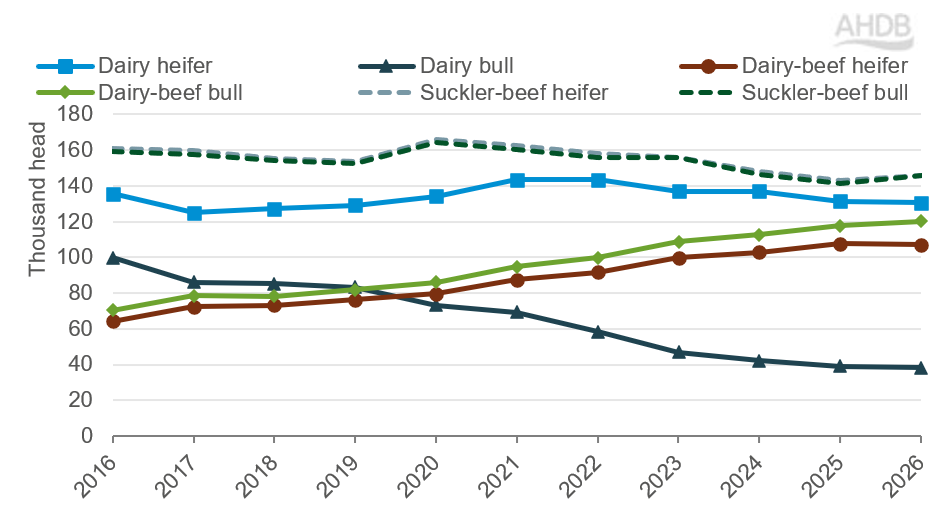
Calf registration data continues to highlight a structural shift in beef production systems. Dairy-beef calf numbers have been rising, while dairy bull registrations continue to fall, as high sexed semen use continues across the national dairy herd.

Table.1 Q1 calf registrations, by type 

Calf type 2026 Change from 2025
Dairy female 125,994 -0.7%
Dairy male 36,870 -2.7%
Dairy beef female 107,127 -0.5%
Dairy beef male 120,176 +2.1%
Suckler beef female 146,054 +2.2%
Suckler beef male 145,626 +3.0%

What is evident in the most recent set of data, is the divergence of the dairy beef bull and dairy beef heifer. Dairy beef bull calf births grew by 3% Q1 year-on-year, while dairy beef heifer births fell by 0.5% over the same period. This divergence coincides with beef sexed male semen entering the market.

There are early signs of recovery in the suckler herd shown by growth in the registrations of suckler calves over the period of Jan-Mar 2026 versus 2025. This likely reflects the impact of record high beef prices in 2024/25, which encouraged producers to retain breeding animals and increase mating activity. Given the biological production cycle, these on-farm decisions are now beginning to translate into higher calf numbers approximately 12–18 months later.

Figure 2: Q1 GB calf registrations by type (Jan-Mar)

Calf registration by type

Source BCMS & AHDB calculations

Figure 2 shows the calf registrations from Q1 2016-2026. Dairy heifer registrations are represented by the light blue, dairy bull black, dairy-beef heifer brown, dairy beef bull green, suckler beef heifer grey dashes and suckler beef bull in dark green dashes.

Youngstock and future supply

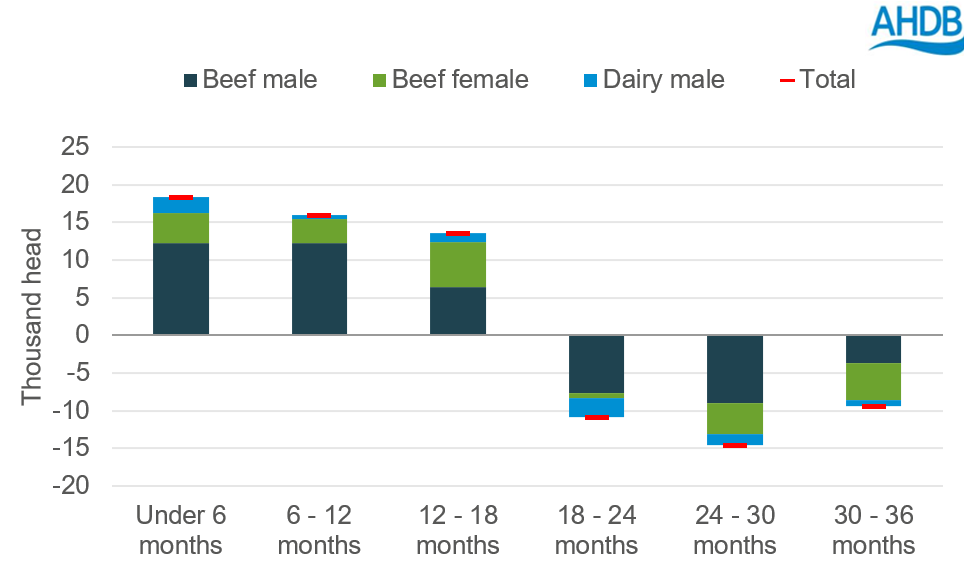
Figure 3: Year-on-year change in number of cattle for beef production in GB as of 1 April 2026/25 (data includes beef animals + dairy males)

Bar chart showing YoY change in beef cattle by age

Source: British Cattle Movement Service, AHDB calculations

Figure 3 shows a clear shift in herd structure for animals for beef production. Older cattle numbers are tightening, reducing short-term slaughter availability, while the number of younger cattle on farms has increased year on year.

The increase in younger cattle indicates that prime beef production is likely to contract at a slower rate over the coming years as these animals move through to slaughter. There is also potential for a slowing in the contraction of the breeding herd if some animals are retained.

However, this trend is not guaranteed to continue. Whilst high prices in 2024–25 encouraged producers to increase calf numbers, recent softening of prices over the past six months may dampen incentives to continue expanding production. Whether youngstock numbers keep rising remains a key watchpoint

Conclusion

In summary, the GB cattle herd continues to contract overall, but clear changes in herd structure are emerging. Younger cattle numbers are beginning to rise, while older cattle availability is tightening, supporting current market conditions.

Looking ahead, the extent to which this developing pipeline translates into increased beef supply will depend heavily on price signals and producer confidence, with future production closely tied to how market returns evolve.

Image of staff member Molly Corbett

Molly Corbett

Analyst (Livestock)

See full bio


Sign up for regular updates

You can subscribe to receive Beef and Lamb market news straight to your inbox. Simply fill in your contact details on our online form.

Visit the Keep in touch page

While AHDB seeks to ensure that the information contained on this webpage is accurate at the time of publication, no warranty is given in respect of the information and data provided. You are responsible for how you use the information. To the maximum extent permitted by law, AHDB accepts no liability for loss, damage or injury howsoever caused or suffered (including that caused by negligence) directly or indirectly in relation to the information or data provided in this publication.

All intellectual property rights in the information and data on this webpage belong to or are licensed by AHDB. You are authorised to use such information for your internal business purposes only and you must not provide this information to any other third parties, including further publication of the information, or for commercial gain in any way whatsoever without the prior written permission of AHDB for each third party disclosure, publication or commercial arrangement. For more information, please see our Terms of Use and Privacy Notice or contact the Director of Corporate Affairs at info@ahdb.org.uk  © Agriculture and Horticulture Development Board. All rights reserved. 

Topics:

Sectors:

Tags:

×