OSR CSFB management tip: Sowing dates

Cabbage stem flea beetle (CSFB) management in oilseed rape (OSR) requires a combination of approaches. Find out why ditching traditional sowing dates can be particularly effective.

Migration trends

Monitoring of CSFB migration over several autumns (mainly at OSR sites in England) has revealed broad trends:

  • Adult beetles fly (migrate) into OSR during late summer to early autumn
  • Initially, low numbers migrate in August
  • Numbers build slowly until a large influx leads to a peak (usually between the start and the middle of September)
  • After the peak, migration tends to level off into October

Timings vary by season and location. For example, monitoring at seven sites in 2025 saw migration peak later (from mid-September to early October).

The complex factors that underpin migration are not fully understood. However, several studies show that temperature, relative humidity and wind speed are important.

Sowing dates

Early drilling (adult damage)

Although OSR can tolerate large amounts of feeding, plants can die, especially if peak migration coincides with crop emergence.

Early drilling (in the first half of August) can produce a well-established crop that tolerates beetle feeding during peak migration.

Adult damage surveys at more than 300 sites (2014 to 2017) found that crops emerging in the last two weeks of August and the first two weeks of September suffered higher percentages of leaf area loss.

When CSFB migration started, it was also found that the percentage leaf area lost was greater when the crop was before or at emergence (averaging about 40% loss), compared to when the cotyledons had unfolded (just above 20% loss). Losses continued to reduce slightly once true leaves started to unfold (just under 20% loss).

Crops drilled at the end of August to early September are usually the most vulnerable to adult CSFB damage.

Early drilling (larvae damage)

In addition to adult damage, larval feeding in petioles/stems needs to be considered.

Early drilling is associated with higher larval numbers per plant:

Such crops are exposed to more CSFB and a longer egg-laying period (which typically starts about two weeks after migration).

As conditions are usually warmer, the rates of egg laying and egg development are also greater.

A survey at over 1,300 sites across 15 years (2004 to 2016) showed the trend for higher larval loads in early sown crops (in both the autumn and spring).

Field trials have seen similar findings:

  • Mid-August drilling: About five larvae per plant in the autumn
  • Later drilling dates: Numbers gradually decreased
  • After mid-September: Most plants were free of larvae

Later drilling

Later drilling (mid-September onwards) reduces larval load and increases the chance crops emerge after peak migration.

After peak migration, most beetles will have landed elsewhere. As they lose their wing muscles shortly after landing, they are unlikely to move to other fields.

Strong evidence

The risks associated with CSFB adults and larvae are generally consistent, according to UK-based research.

Observations in other European counties (e.g. France and Germany), findings from statistical models, anecdotal evidence in recent years and in-field monitoring (as far back as the 1960s) are also relatively consistent.

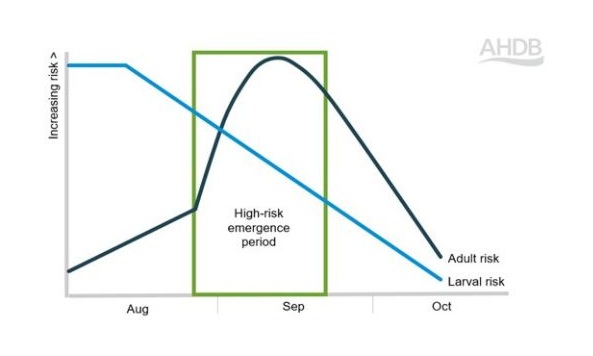
Figure 1 summarises the findings for an average year.

Figure 1. High-risk period for emerging oilseed rape crops

Figure 1 indicates how adult and larval risks change in OSR emerging during August, September and October.

Adult risk is highest at peak migration, which usually occurs from the beginning to the middle of September.

The larval risk gradually decreases over this period.

In an average year, emerging oilseed rape crops are most vulnerable in September, with the overall risk dropping sharply towards the end of the month and into October.

Typically, the high-risk period runs from about the end of August to about the middle of September.

Wider risks

It’s essential to consider other risks.

Early drilling may favour other pests (e.g. turnip sawfly and cabbage root fly) and some diseases (e.g. clubroot). Crops may also require extra canopy management.

Later drilling may negatively impact yield, especially when drilled very late with early frosts.

Soil moisture

It’s critical to wait for moisture (present or forecast) before sowing.

As low soil moisture slows emergence and growth, an early drilled crop could potentially emerge during peak migration.

The percentage leaf area lost increased from about 15% to 25% in seedbeds with average and low soil moisture, respectively, according to survey results.

Field trial case study

A farm-scale trial in the West Midlands (2020/21) showed clear drill-date impacts.

Crop sown:

  • 26 August: Clear damage
  • 6 September: Crop destroyed
  • 15 September: Significantly less damage than the August-sown crop

Compared to the crop sown on 15 September, the early sown crop had 19 and 5 times as many larvae in the autumn and spring, respectively.

Although rarely seen in pest trials, higher damage had a clear yield impact.

The yield in the crop sown on 15 September was 47% greater than the crop sown on 26 August.

CSFB management strategies

Due to the complex nature of CSFB, never rely on a single strategy.

Use integrated pest management (IPM) to layer as many techniques as possible to minimise the risks.

Visit the CSFB management strategies home page

The home page also includes information on CSFB Research+, which is generating evidence to further improve strategies.

Key research timeline

These AHDB projects illustrate our continuous investment in CSFB research since 2013.

CSFB control: Field trials quantified the potential to control CSFB without neonicotinoid seed treatments and assessed crop tolerance.

Maximising CSFB control without neonicotinoid seed treatments (2013 to 2014)

CSFB IPM: This project reviewed the agronomic factors that affect CSFB adult feeding and larval infestation, including crop damage. It also reviewed treatment thresholds and created initial IPM strategies.

IPM of CSFB (2016 to 2020)

CSFB impact: Informed the development of the top CSFB management strategies released in 2025 and monitored migration at sites across England (autumns 2020 to 2024).

Reducing the impact of CSFB (2020 to 2024)

CSFB Research+: An active project to strengthen IPM strategies and continue migration monitoring (autumn 2025 and 2026, as a minimum).

CSFB Research+: Developing a comprehensive programme for CSFB management (2025 to 2030)

Further information

Explore all of our CSFB research projects

Contact a Crop Health team member

×