Lamb and pork grow through delivery apps

Monday, 3 August 2026

After a pandemic-driven boom, the takeaway and delivery market is showing signs of decline. However, sales through delivery apps continue to grow, supported by loyal and highly engaged users. Against this shifting backdrop, some red meat categories are creating new opportunities for growth.​

Key points

  • The takeaway and delivery market is losing shoppers and volume
  • Red meat sales are stable within this market, driven by strong lamb performance
  • Sales through quick delivery apps are growing 0.5%, driven by loyal engaged shoppers
  • Lamb and pork sales are growing at a faster rate through delivery apps
  • Shoppers using delivery apps for takeaways are also adding groceries to their baskets

Takeaway and delivery market under pressure

Takeaway and delivery account for 26% of all out-of-home (OOH) spending, worth £17.7bn over the past year1.

However, the market has lost £400m worth of spend in the last year, a decline of 2.2% year-on-year.

This decline comes from1:

  • Smaller baskets: 44% of the loss is because people are buying less each time
  • Fewer trips: 40% comes from people making fewer transactions overall
  • People opting out: 17% comes from people stopping this type of spend entirely

Rising financial pressure is a key factor. 80% of consumers are now extremely or very concerned about the cost of living, 8% higher than a year ago2.

Since 72% of takeaway buyers see them as a luxury3, consumers under financial strain may cut back even more in this area.

Consumers are becoming more selective about when and how they buy takeaways driven by value, convenience and occasion.

Lamb is thriving in takeaway and delivery

Within the takeaway and delivery market, red meat spend is stable. It has declined only 0.1% year-on-year and was worth £4bn in the last year1.

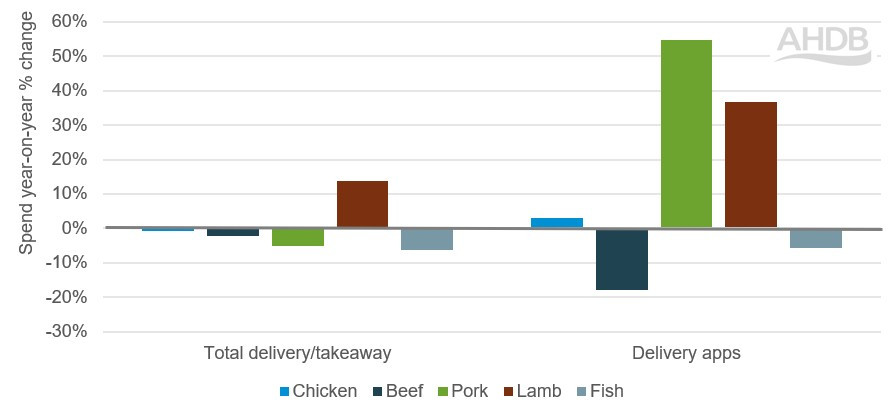
Lamb was the standout performer with spending up 13.9%, driven by kebabs.

Pork spend declined by 5.2%, driven by breakfast, sandwich and pizza dishes.

Beef spend also fell, down 2.3%, due to high inflation. However, beef remains the key protein for burgers, delivering 64% of burger value in the last year Chicken follows in second place with 32%.

Delivery apps continue to grow

Platforms such as Deliveroo, Uber Eats and Just Eat generated £2.6bn in takeaway and delivery spending.

Twenty per cent of people across Great Britain are now using these apps, with loyalty schemes keeping users active and engaged.

Spending through delivery apps increased by 0.5% in the last year1. This growth is being driven by existing users ordering more frequently, highlighting the effectiveness of app loyalty schemes in maintaining engagement.​

Lamb and pork perform well

Lamb spend through delivery apps rose by 36.7% year-on-year1, growing at a faster rate than the broader takeaway and delivery market.

Pork is also performing well, with spending through delivery apps growing by 54.7%1. Pork’s performance is driven by burgers, sandwiches and pizzas1.

Beef declines

In contrast, beef spend through delivery apps fell by 18%. This reflects the decline seen in the broader takeaway and delivery market1.

Figure 1. Year-on-year spend % change for protein across the total takeaway/delivery market and delivery apps

Year on year spend % change for proteins across takeaway/delivery market and delivery apps

Source: Worldpanel by Numerator UK OOH panel, 52 w/e 22 March 2026.

Delivery apps growing in the retail market with Gen Z

In the retail market, delivery apps such as Just Eat and Deliveroo and rapid delivery from retailers such as Whoosh (Tesco) and Chop Chop (Sainsburys) are also growing in importance. Usage reached 22% in March 2026, up three percentage points compared with November 20245.

These options are very popular with younger consumers. Almost half (49%) of Gen Z consumers have ordered groceries through them in the last four weeks5.

Consumers mainly use rapid delivery apps to:

  • Save time
  • Buy items for a specific meal
  • Avoid visiting a physical store
  • Buy forgotten items
  • Access exclusive discounts and promotions7

Delivery cost and speed are important factors when choosing a delivery app.

Users tend to be loyal, with 50% of shoppers returning to the same delivery platform whenever they make a purchase5.

One in five shoppers using these delivery routes for takeaways are also adding groceries to their basket. This showcases the opportunity for retail to tap into takeaway and delivery occasions5.

What this means for red meat purchases

The takeaway and delivery market is likely to remain under pressure as shoppers look to save money during the cost-of-living crisis.

However, red meat will continue to play a key role, headed up by dishes such as lamb kebabs and beef burgers.

Delivery apps appear well placed to maintain their importance among younger consumers who value convenience, speed and loyalty rewards.

Within these apps, pork and lamb dishes will continue to dominate.


Sources

1 Worldpanel by Numerator UK, OOH panel, Total Delivery | 52 we 22nd March 2026

2 Sparkminds, Ear to the ground, June 2026

3 Mintel Foodservice Delivery and Takeaway UK, 2026

4Lumina Intelligence, Menu Tracker 2026

5IGD Shopper Vista Research, March 2026

6Worldpanel by Numerator UK, Worldpanel plus, 2026

7Mintel Online Grocery Retailing, 2025

Image of staff member Kim Heath

Kim Heath

Lead Retail Insight Manager

See full bio

Image of staff member Emma Wantling

Emma Wantling

Retail and Consumer Insight Manager

See full bio


Sign up to receive the latest information from AHDB.


While AHDB seeks to ensure that the information contained on this webpage is accurate at the time of publication, no warranty is given in respect of the information and data provided. You are responsible for how you use the information. To the maximum extent permitted by law, AHDB accepts no liability for loss, damage or injury howsoever caused or suffered (including that caused by negligence) directly or indirectly in relation to the information or data provided in this publication.

All intellectual property rights in the information and data on this webpage belong to or are licensed by AHDB. You are authorised to use such information for your internal business purposes only and you must not provide this information to any other third parties, including further publication of the information, or for commercial gain in any way whatsoever without the prior written permission of AHDB for each third party disclosure, publication or commercial arrangement. For more information, please see our Terms of Use and Privacy Notice or contact the Director of Corporate Affairs at info@ahdb.org.uk  © Agriculture and Horticulture Development Board. All rights reserved. 

×