Tighter European sheep supplies boost prospects: Lamb market update

Thursday, 1 October 2026

Lower sheep meat production across key EU countries, combined with strong export demand, has tightened supplies across the European market in 2026. This article explores the latest trends in EU production, prices, trade and market balance, and what they could mean for the UK sheep sector.

Key points

  • EU sheep meat production for the year to date (Jan-Jun) saw a modest contraction, due to high production costs
  • Total EU exports of fresh and frozen sheep meat increased 17% (2,800) to 19,400 tonnes for the year to date (Jan – July)
  • EU imports of fresh/frozen sheep meat decreased 3% year-on-year (2,900 tonnes) to 96,500 tonnes
Image of staff member Hannah McLoughlin

Hannah McLoughlin

Trainee Analyst

See full bio

Production

Production trends across the selected EU countries point to a modest contraction for the year-to-date January to June.

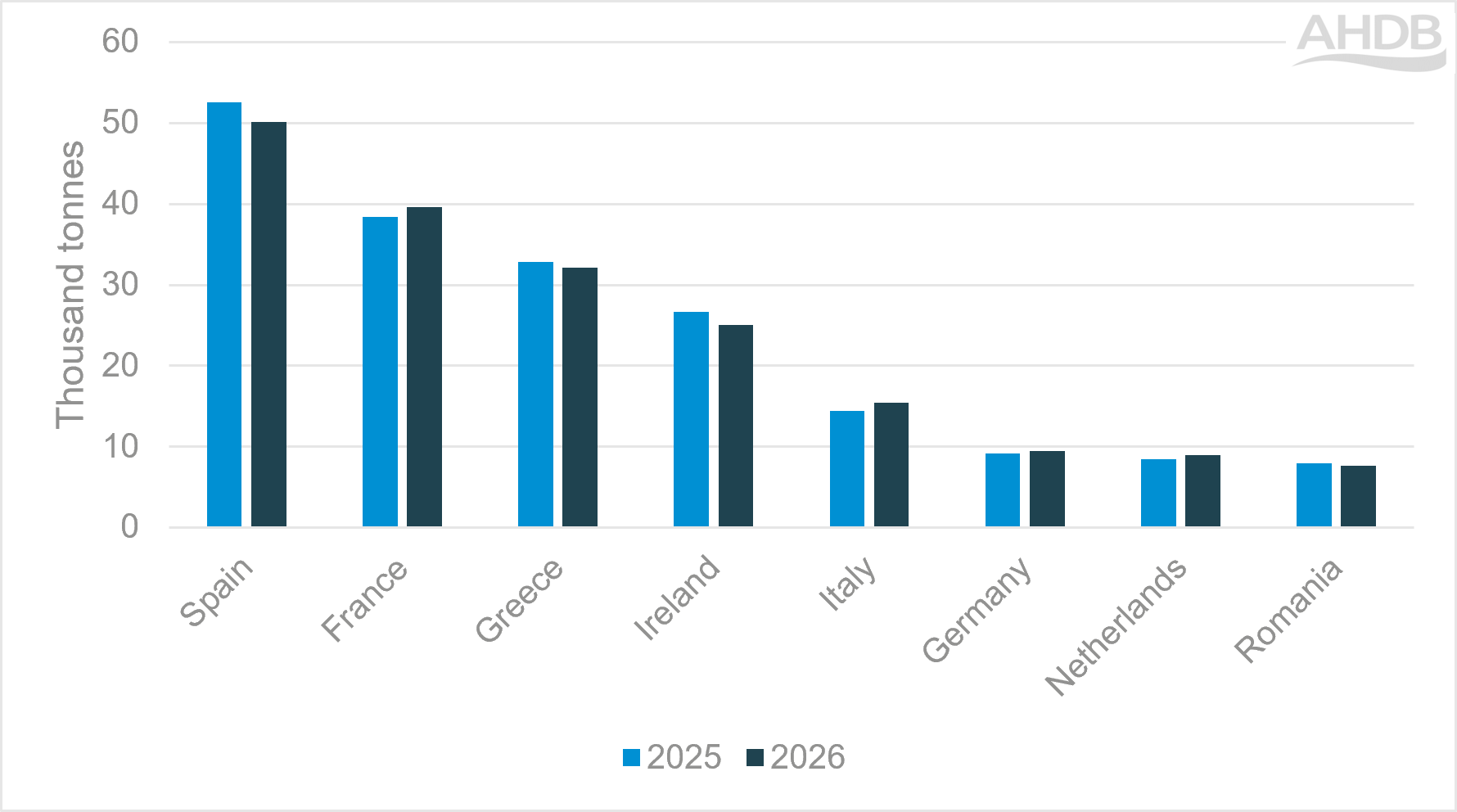
Figure 1. Sheep and goat production of select EU27 countries for YTD (Jan-Jun)

shows a bar chart comparing 2025 and 2026 production volumes in thousand tonnes across selected EU c

Source: European Commission

Figure 1 shows a bar chart comparing 2025 and 2026 production volumes in thousand tonnes across selected EU countries

Although France (3%) and Italy (7%) recorded small year-on-year increases, these gains were insufficient to offset declines in key producing countries, particularly Spain, Greece and Ireland.

Spain saw a decrease of 5% (2,390t) to 50,130 tonnes. Given Spain's dominant share of production, its reduction in output had the greatest influence on the overall trend, resulting in a slight weakening of production across the countries shown.

Prices

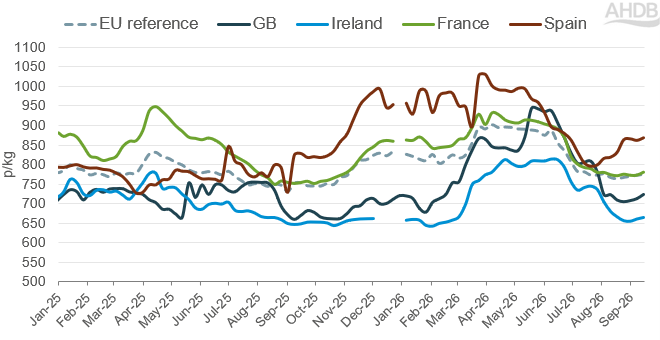
The EU reference price increased from around 820p/kg in January to almost 900p/kg in late spring, reflecting tighter market conditions. Prices then weakened during the summer, falling back towards 780p/kg.

Figure 2. Weekly EU and GB deadweight lamb prices p/kg

  a line chart showing weekly EU and GB deadweight lamb prices from January 2025 to September 2026.

Source: EU Commission, AHDB

Figure 2 shows a line chart showing weekly EU and GB deadweight lamb prices from January 2025 to September 2026.

GB prices showed the strongest seasonal volatility. After starting the year below the EU average, prices rose rapidly from March onwards, reaching a peak of around 950p/kg in June. This was followed by a sharp correction, with prices falling to around 710p/kg by September.

The widespread decline from June onwards indicates seasonal pressure from increased market availability and softer demand. The particularly steep fall in GB prices compared with the EU average suggests the UK market faced greater supply pressure during the summer, while Spain maintained a significant premium throughout the year, reflecting stronger domestic demand and tighter market conditions.

Trade

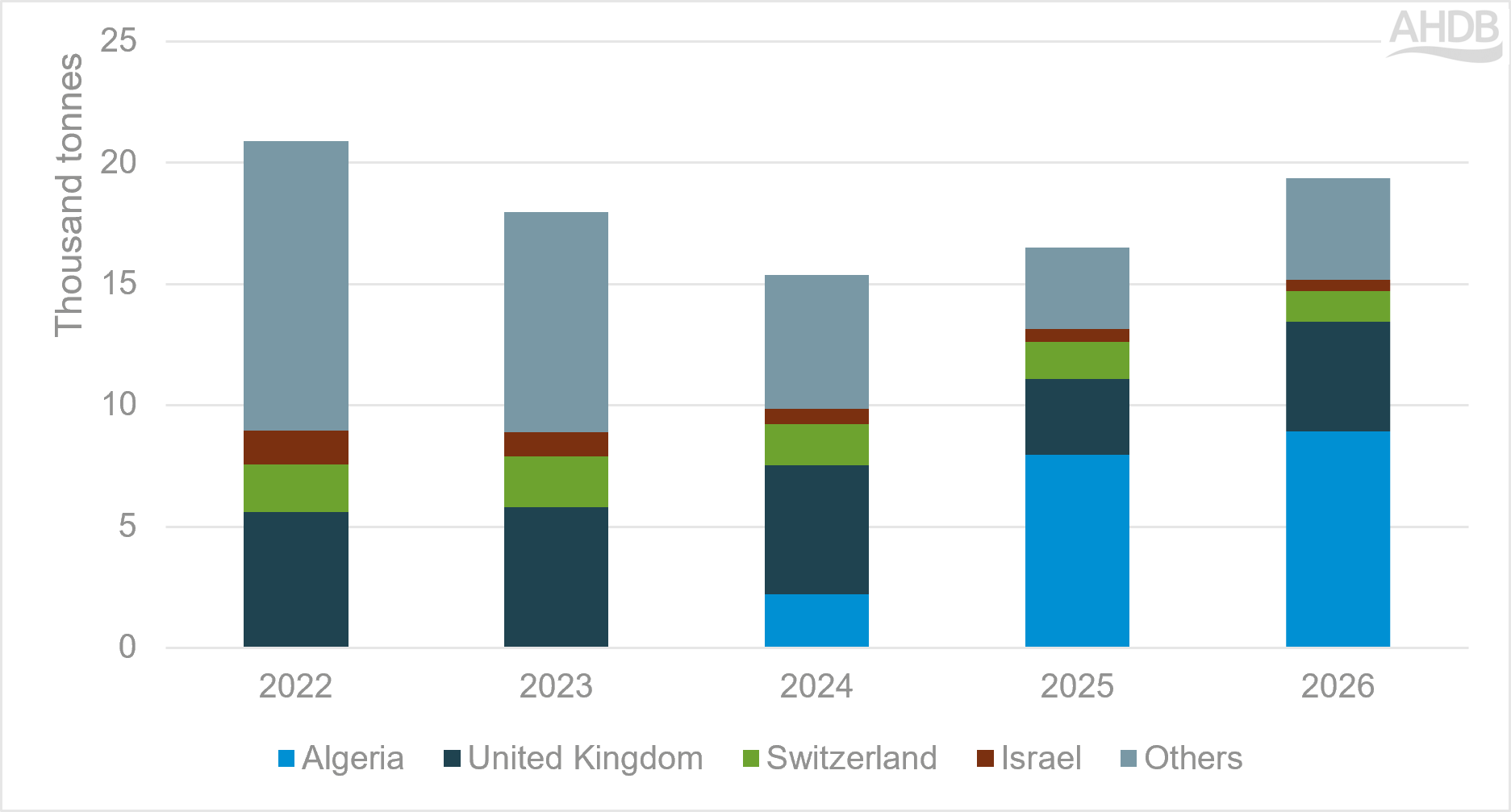
Total EU exports of fresh and frozen sheep meat increased 17% (2,800) to 19,400 tonnes for the year to date (January – July).

Figure 3. EU27 sheep meat export volumes by supplier country YTD Jan-Jul for 2022-2026   

a bar chart showing EU sheep meat imports by origin from 2022 to 2026, showing lower exports in 2023

Source: Eurostat compiled by Trade Data Monitor LLC

Figure 3 shows a bar chart showing EU sheep meat imports by origin from 2022 to 2026, showing lower exports in 2023 and 2024 followed by an increase in 2025 and 2026.

Algeria has continued to be the EU’s main export destination with shipments increasing by 12% (1,000 tonnes) to 8,900 tonnes, potentially due to population growth, greater demand linked to Eid celebrations, high production costs, and lower productivity within Algeria's sheep sector all increasing the country's reliance on imports.

Exports to the UK increased by 43% (1,400 tonnes) to 4,500 tonnes, this could be due to continued demand within the UK market and the need to supplement domestic supplies.

For the same period, EU imports of fresh/frozen sheep meat decreased by 3% year-on-year (2,900 tonnes) to 96,500 tonnes. Lower domestic demand across the EU could be the reason for this reduction in imports.

This decline was predominantly driven by a 6% (2.800 tonnes) decrease from the UK, declines were also seen for Australia (-9%) and others (-14%).

New Zealand remains the top supplier and saw a marginal increase of 1% (300 tonnes) to 45,800 tonnes.

Market balance

The latest EU sheep market balance points to a tightening supply situation across the bloc.

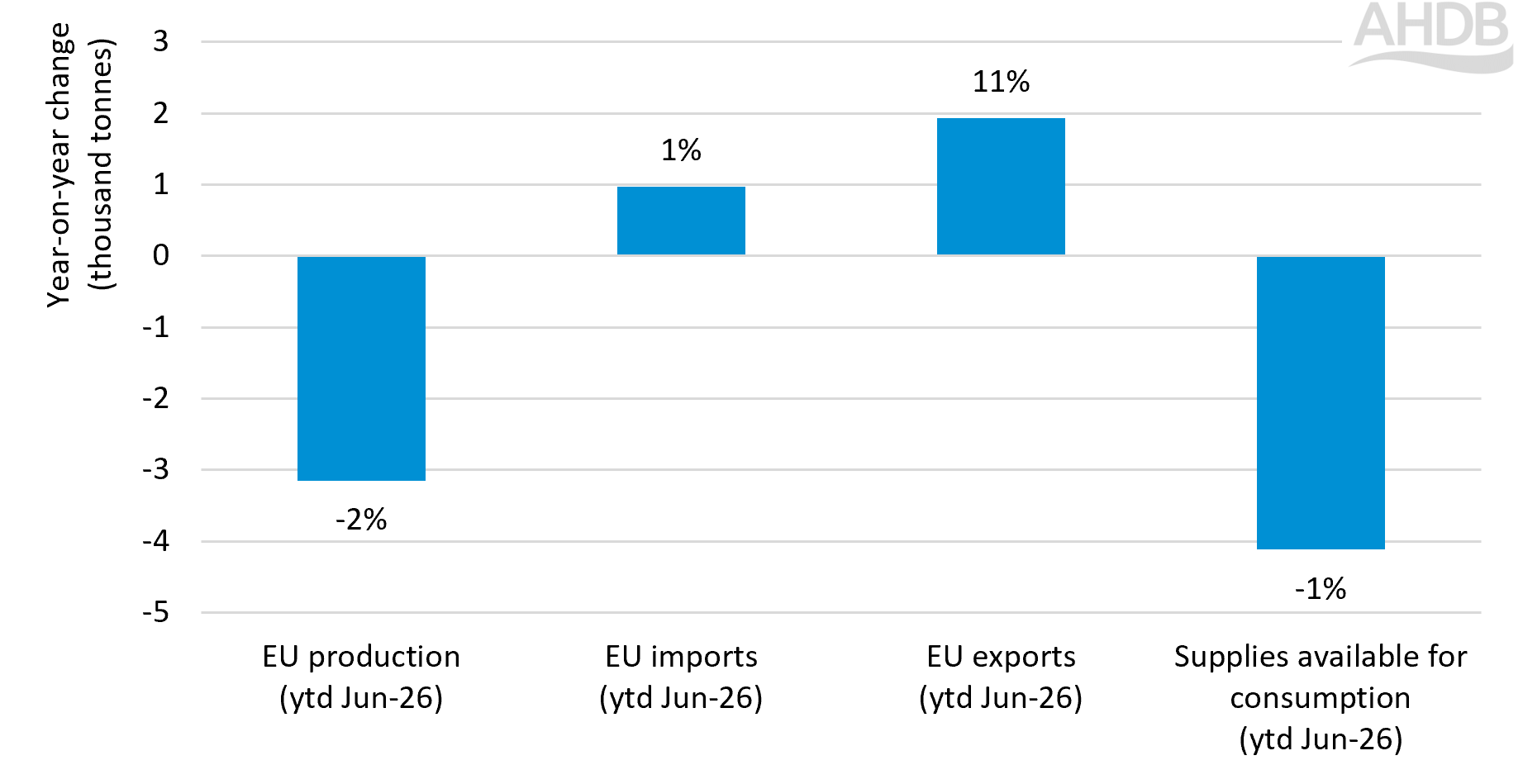
Figure 4. EU sheep market balance YTD Jan-Jun

a bar chart showing year-on-year changes in EU sheep supply components (YTD January to June 2026, th

Source: European Commission, Trade Data Monitor LLC, Eurostat

Figures are in carcase weight equivalent and are for Jan-Jun rather than Jan-July so may not match figures quoted elsewhere.

Figure 4 shows a bar chart showing year-on-year changes in EU sheep supply components (YTD January to June 2026, thousand tonnes).

EU production fell by around 3,000 tonnes (-2%) year-on-year. The reduction in output reflects persistent challenges within the EU sheep sector. Producers continue to face elevated feed, energy and labour costs, while flock numbers have been under pressure in several member states due to poor profitability and an ageing farming population.

Weather-related challenges and animal health concerns have also constrained production in some regions.

Stronger international demand drew more EU sheep meat onto export markets, further tightening domestic availability. As a result, despite a modest increase in imports, the volume of sheep meat available for EU consumers declined slightly in the first half of 2026.

What does this mean for the UK sheep market?

The tightening EU sheep meat market presents a positive outlook for the UK sheep sector. Lower production across EU key producing countries, combined with strong international demand, is reducing sheep meat availability across Europe. This could help provide underlying support to UK lamb prices and create opportunities for UK exporters to fill supply gaps in key markets. While seasonal increases in lamb marketings have weighed on GB prices in the short term, constrained EU production and limited prospects for rapid supply growth are likely to keep market fundamentals relatively supportive for the UK.


Sign up for regular updates

You can subscribe to receive Beef and Lamb market news straight to your inbox. Simply fill in your contact details on our online form.

Visit the Keep in touch page

While AHDB seeks to ensure that the information contained on this webpage is accurate at the time of publication, no warranty is given in respect of the information and data provided. You are responsible for how you use the information. To the maximum extent permitted by law, AHDB accepts no liability for loss, damage or injury howsoever caused or suffered (including that caused by negligence) directly or indirectly in relation to the information or data provided in this publication.

All intellectual property rights in the information and data on this webpage belong to or are licensed by AHDB. You are authorised to use such information for your internal business purposes only and you must not provide this information to any other third parties, including further publication of the information, or for commercial gain in any way whatsoever without the prior written permission of AHDB for each third party disclosure, publication or commercial arrangement. For more information, please see our Terms of Use and Privacy Notice or contact the Director of Corporate Affairs at info@ahdb.org.uk  © Agriculture and Horticulture Development Board. All rights reserved. 

×