Dry weather and drought impacts on farm businesses

Tuesday, 27 October 2026

During 2026, the UK has experienced extreme hot weather conditions and drought conditions. This has had an impact on agriculture in terms of harvest and livestock management. This article explores the economic impacts of the drought on farm.

Key points

  • Extreme weather including drought and heatwaves has impacted farm operations and yields during 2026
  • Harvest 2026 was the earliest since AHDB started the Harvest Progress report
  • Wheat and spring barley yields have been impacted and had an impact on farm profits
  • An increase in cereal prices during summer 2026 provide a buffer to the impact of reduced yields

Weather conditions

According to provisional Met Office data, summer 2026 was the UK’s hottest summer on record. There were five heatwaves and 40 days when temperatures reached above 30 degrees Celsius.

England and Wales had the driest July on record, with some areas across the south of England not recording rainfall for two months. Much of the midlands and south of England are still in drought status at the end of August 2026.

The lack of rainfall, alongside extreme heat has had an impact on farming and harvest during the summer months.

Overview of Harvest 2026

One of the most visible impacts of the drought and extreme hot weather has been the pace of harvest, with some farmers completing harvest well ahead of previous years. The AHDB harvest progress report found that 2026 was the earliest harvest since our records began in 2006.

The harvest progress report has shown variation in yields across regions and soil types, depending on the specific weather conditions and soil ability to retain moisture. There has also been huge variability among crops with winter oilseed rape seeing yields up compared to 2025 and the 10-year average, however wheat, spring barley and oats show significant reduction in average yields.

Model farm overview and methodology

This analysis has been carried out using the AHDB virtual farms. These are theoretical farms that exist on a spreadsheet and are designed to be representative of ‘typical farms’. They have been created as middle 50% performing businesses. This analysis has looked at two of the model farms, the 455ha arable farm in the East of England, and a lowland 220ha mixed farm in Yorkshire and the Humber.

The 455ha arable farm in the East of England grows winter wheat, winter beans, winter oilseed rape, spring barley and is involved in the Countryside Stewardship mid-tier scheme. 

The 22ha lowland mixed farm grows winter wheat, spring barley and winter oilseed rape, involved in the Countryside Stewardship mid-tier scheme and has both permanent and temporary grassland that is used for grazing and silage. The farm also has a beef finishing herd and breeding ewes fed on a homegrown feed ration and baled silage alongside grazing. 

Arable farm analysis

In this scenario the baseline year is harvest 2025.

This shows the impact of a 5% drop in yield, 10% and 15%. All other information is kept the same, including input costs, overheads and prices. Based on the harvest progress report, yields are down about 6% for winter wheat and 17% for spring barley compared to 2025. This analysis is only looking at the impact of reduced yields for the spring barley and wheat crops.

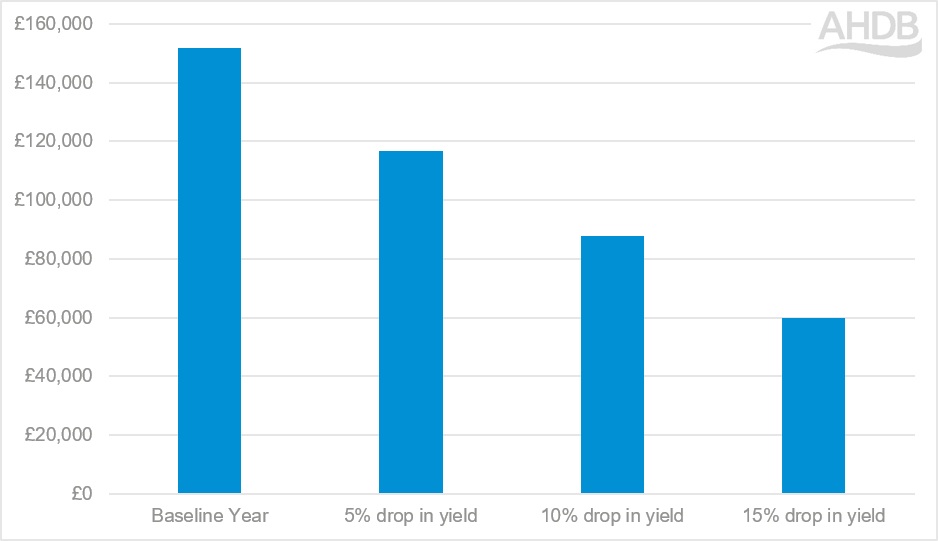
A 5% drop in yield causes net profits to drop by 23%.

A 10% drop in yield causes net profits to drop by 42%.

A 15% drop in yield causes net profits to drop by 61%.

Figure 1 shows the net profits for the 2025 baseline year for the 455ha arable farm. The graph also shows the impact of 5%, 10% and 15% in yields on net profits.

Figure 1. Impact of reduced yields on net profits for the arable (455ha) model farm.

Source: AHDB

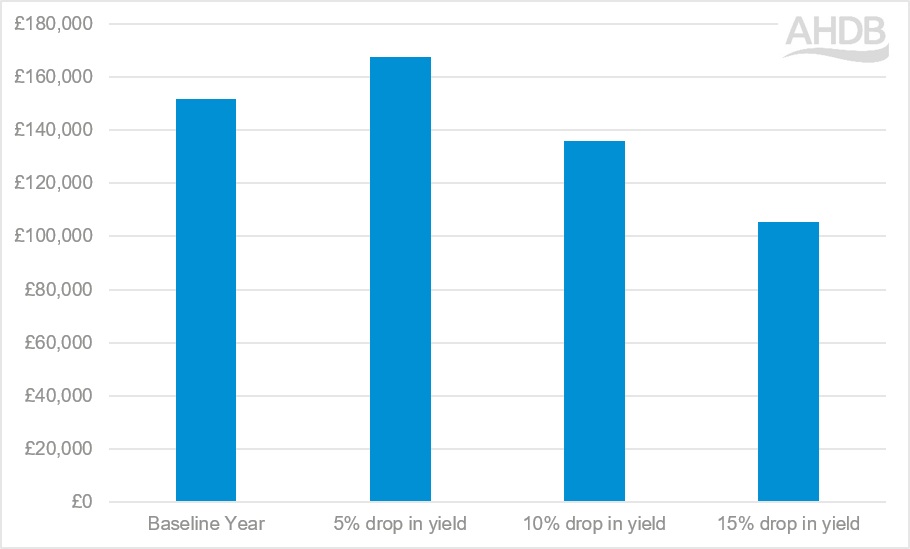
Figure 1 shows the impact on net profit if all other factors, other than yields, stayed the same. However, during Summer 2026 cereals prices have been increasing, therefore the significant negative impact on yields could be buffered slightly by higher output prices. With this in mind, Figure 2 shows the impact of yield reduction if prices increased by 10%.

Figure 2. Impact of reduced yields on net profits for the arable (455ha) model farm if prices (£/t) increased 10%

Source: AHDB

A 10% increase in price of wheat and barley buffered the net profit impact if yields reduced by 5%. However, there was still an 11% drop in net profit if yields dropped by 10% and a 31% drop in net profit if yields reduced by 15%.

Lowland mixed farm analysis

The lowland mixed farm has both cereals crops and cattle and sheep on farm. In this scenario the baseline year is harvest 2025.

This shows the impact of a 5% drop in yield, 10% and 15%. All other information is kept the same, including input costs, overheads and prices. This analysis is only looking at the impact of reduced yields for the spring barley and wheat crops.

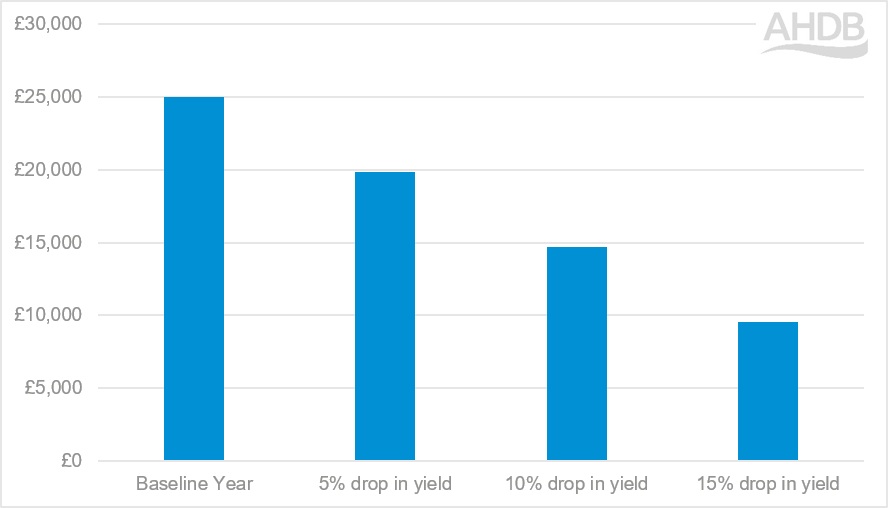
A 5% drop in yield causes net profits to drop by 23%.

A 10% drop in yield causes net profits to drop by 42%.

A 15% drop in yield causes net profits to drop by 61%.

Figure 3. Impact of reduced yields on net profits for the lowland mixed (220ha) model farm.

Source: AHDB

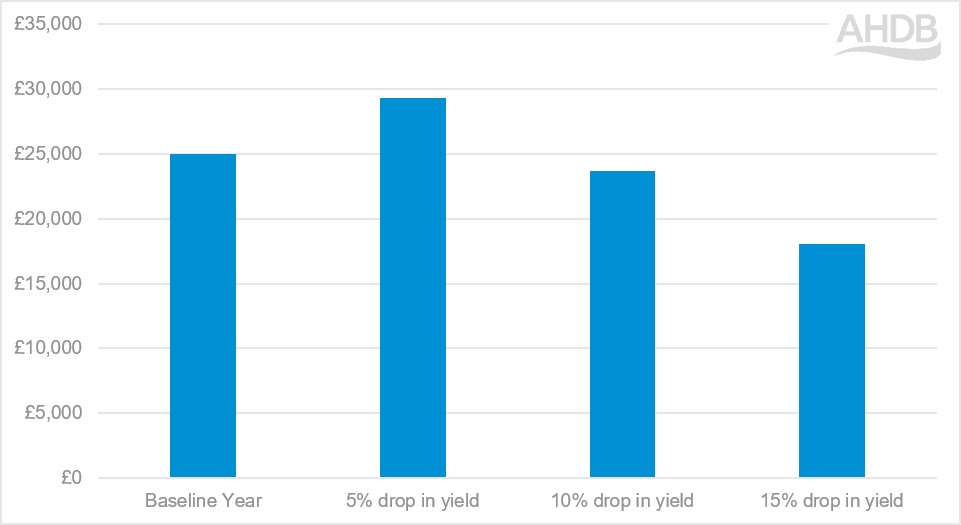
Figure 4 shows the impact on net profits if the yields were to decrease, but the cereal prices were to increase by 10%.

Figure 4. Impact of reduced yields on net profits for the lowland mixed (220ha) model farm if prices (£/t) increased 10%

Source: AHDB

This shows a similar picture to the arable model farm analysis. If cereal prices were to increase for this farm, it would help to buffer the impact of the yield loss.

Discussion

This analysis shows the impact on farm profit if yields reduced compared to 2025.

The AHDB Harvest Progress Report shows significant variability in yields across the country, but average yields for wheat and spring barley are down compared to 2025 and the 10-year average.

Our analysis shows that the impact on net profit is significant. A 10% drop in yield on the arable (455ha) model farm saw a 42% reduction in profit. This is without considering other impacts such as increased cost of inputs such as fuel and fertiliser.

During summer 2026 cereal prices have started to increase. The increase in cereal prices provides a buffer in scenarios where yield losses have had a significant impact on net profits.

The mixed farm also saw a significant drop in net profit due to drop in yield. The mixed farm will use homegrown crops for animal feed and straw. A drop in yield and general poor straw yields due to shorter cereal crops may mean that this farm needs to buy animal feed over the winter months. In addition, due to dry weather over the summer months some livestock farmers are already using winter feed stocks to supplement grazing as grass growth has slowed or almost stopped in many regions.

Throughout 2026, farmers have not only been experiencing extreme weather conditions. Since March, the price of both fuel and fertiliser has been extremely volatile due to the impacts from the conflict in the Middle East.

Most arable farmers will have bought fertiliser before the conflict began; however, livestock farmers who are more likely to spot buy fertiliser will have had to absorb these increased costs.

The increased red diesel prices will have also started to hit arable farmers going into harvest 2026.

This analysis has not factored in increased input costs but should be considered in the wider picture of impacts on farming during 2026.

What can farmers do

With weather extremes becoming more frequent building business resilience is important for future business planning. Understanding the risks, planning for the future and making informed business decisions will be vital in the coming years.

The AHDB characteristics of top performers report explore what the top 25% of farms are doing differently and provides recommendations for farmers looking to improve their own financial performance.

The climate resilience action planner helps identify climate related risks and explore actions to both mitigate risks and recognise opportunities.

The forage for knowledge hub helps give recommendations to optimise pasture management and maximise productivity.

×