- Home
- What communication engaged milk shoppers?
What communication engaged milk shoppers?
If you ask consumers directly what the most important reason is for them when purchasing milk, taste and enjoyment dominates.
However, AHDB knows from previous research that what consumers claim is important to them versus what actually influences behaviour can differ. Our analysis, during timed purchase projection tests, highlighted the importance of nutritional benefits and farming/environment communication to influence behaviour. This ranking was universal across all retailer channels.
% of consumers who would increase their milk purchasing (theme average)
|
Position |
Theme |
% |
|
1 |
Nutritional benefits |
62%* |
|
2 |
Farming/environment |
56%* |
|
3 |
Natural qualities |
56% |
|
4 |
Taste and enjoyment |
52%** |
|
5 |
Heritage and tradition |
52% |
Source: AHDB/Linney re-thinking milk research 2025 (Key: *more important versus what was claimed to be important, **less important versus what was claimed to be important)
But what do consumers want to know about nutrition and farming in the context of milk?
We delved deeper in to the specific messages behind each theme, and for nutritional benefits, this highlighted a preference for information around “Milk naturally contains 7 vitamins and minerals – vitamins B2, B5 and B12, calcium, iodine, potassium and phosphorus”. This came out as most relevant message and resulted in 65% of those tested claiming it would positively impact the amount of milk they would buy. While it ranked lower in claimed appeal, it drove the strongest equity uplifts, benefiting the long-term attitudes to the category, meaning more consumers found the aisle inspirational, exciting, memorable and essential.
Top nutrition messages
based on timed purchase exercise and complimentary analysis
|
Messages |
Relevance (ranking) |
Purchase intent (%) |
Appeal (ranking) |
Equity (asked of strongest performing) |
|
Milk naturally contains 7 vitamins and minerals – vitamins B2, B5 and B12, calcium, iodine, potassium and phosphorus |
1 |
65% |
3 |
Delivers the strongest equity uplift – modern, inspirational, exciting, memorable and essential |
|
Milk is naturally rich in calcium, which helps the maintenance of normal bones and teeth |
2 |
66% |
1 |
Delivers perceptions of inspiration and of being natural |
|
Milk provides vitamin B12, which helps reduce tiredness and fatigue |
3 |
63% |
2 |
|
|
Milk is naturally rich in high-quality protein, which supports muscle growth |
4 |
65% |
2 |
|
|
Milk provides vitamin B12, which helps the body release energy from food |
5 |
64% |
5 |
|
|
Milk is a source of vitamin B12, which contributes to normal mental performance |
5 |
62% |
4 |
|
Source: AHDB/Linney re-thinking milk research 2025. Note: Three other nutrition messages were tested but scored <60% purchase intent
Messaging around the nutritional benefits of specific nutrients such as calcium and protein also came through strongly, with calcium having the strongest appeal. This preference for calcium was particularly relevant to discount and convenience shoppers – as was protein for premium shoppers – highlighting messaging around these nutrients could be dialled up in these channels. For more detail on retailer channel splits, please contact our team.
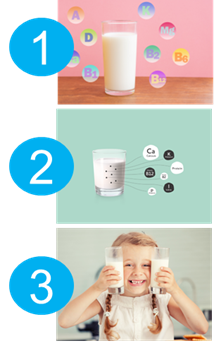
In terms of visuals to complement these messages, top-preferred images showcased the range of vitamins milk provides, as well as reinforcing milk’s strong association with growth by showcasing children enjoying a glass of milk.
Top three performing nutrition images

Source: AHDB/Linney re-thinking milk research 2025
When delving deeper into which farming/environment messages resonate, “British cows are out on grass for most of the year, allowing them to express their natural behaviours” was the most relevant to consumers and second in terms of appeal. It also drove strong equity uplifts among consumers, with them finding this message inspirational, natural, ethical and sustainable.
Top farming/environment messages
based on timed purchase exercise and complimentary analysis
|
Messages |
Relevance (ranking) |
Purchase intent (%) |
Appeal (ranking) |
Equity (asked of strongest performing) |
|
British cows are out on grass for most of the year, allowing them to express their natural behaviours |
1 |
59% |
2 |
Cow welfare evokes emotion – driving inspirational, natural, ethical and sustainable |
|
Dairy produced in the UK is to world-class food and farming standards |
2 |
56% |
4 |
Standards builds trust – driving modern, ethical, memorable, sustainable and exciting |
|
Our milk is produced by British dairy farmers |
3 |
60% |
1 |
|
|
We support dairy farmers through fair prices |
4 |
63% |
3 |
|
|
British farming helps look after British countryside |
5 |
58% |
3 |
|
Source: AHDB/Linney re-thinking milk research 2025. Note: Two other farming/environment messages were tested but scored <52% purchase intent
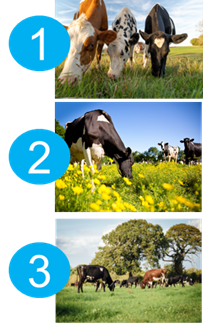
The visual results complemented this with cow-centric images clearly outshining other themes, focusing on animal wellbeing in spacious, natural environments.
Top three performing farming images

Source: AHDB/Linney re-thinking milk research 2025
Other strong performing farming messages, which should complement the above, cover UK world-class farming standards and British messaging. These resonated particularly with convenience shoppers, whereas among discounter shoppers, messaging around dairy farmers receiving fairer prices did well. Premium shoppers reacted positively to all types of farming messages, which shows they can play on a range of messages in this area. For more detail on retailer channel splits, please contact the team.
So how does that translate in aisle and on pack?
What should the milk aisle look like?
Sign up to receive the latest information from AHDB.
While AHDB seeks to ensure that the information contained on this webpage is accurate at the time of publication, no warranty is given in respect of the information and data provided. You are responsible for how you use the information. To the maximum extent permitted by law, AHDB accepts no liability for loss, damage or injury howsoever caused or suffered (including that caused by negligence) directly or indirectly in relation to the information or data provided in this publication.
All intellectual property rights in the information and data on this webpage belong to or are licensed by AHDB. You are authorised to use such information for your internal business purposes only and you must not provide this information to any other third parties, including further publication of the information, or for commercial gain in any way whatsoever without the prior written permission of AHDB for each third party disclosure, publication or commercial arrangement. For more information, please see our Terms of Use and Privacy Notice or contact the Director of Corporate Affairs at info@ahdb.org.uk © Agriculture and Horticulture Development Board. All rights reserved.